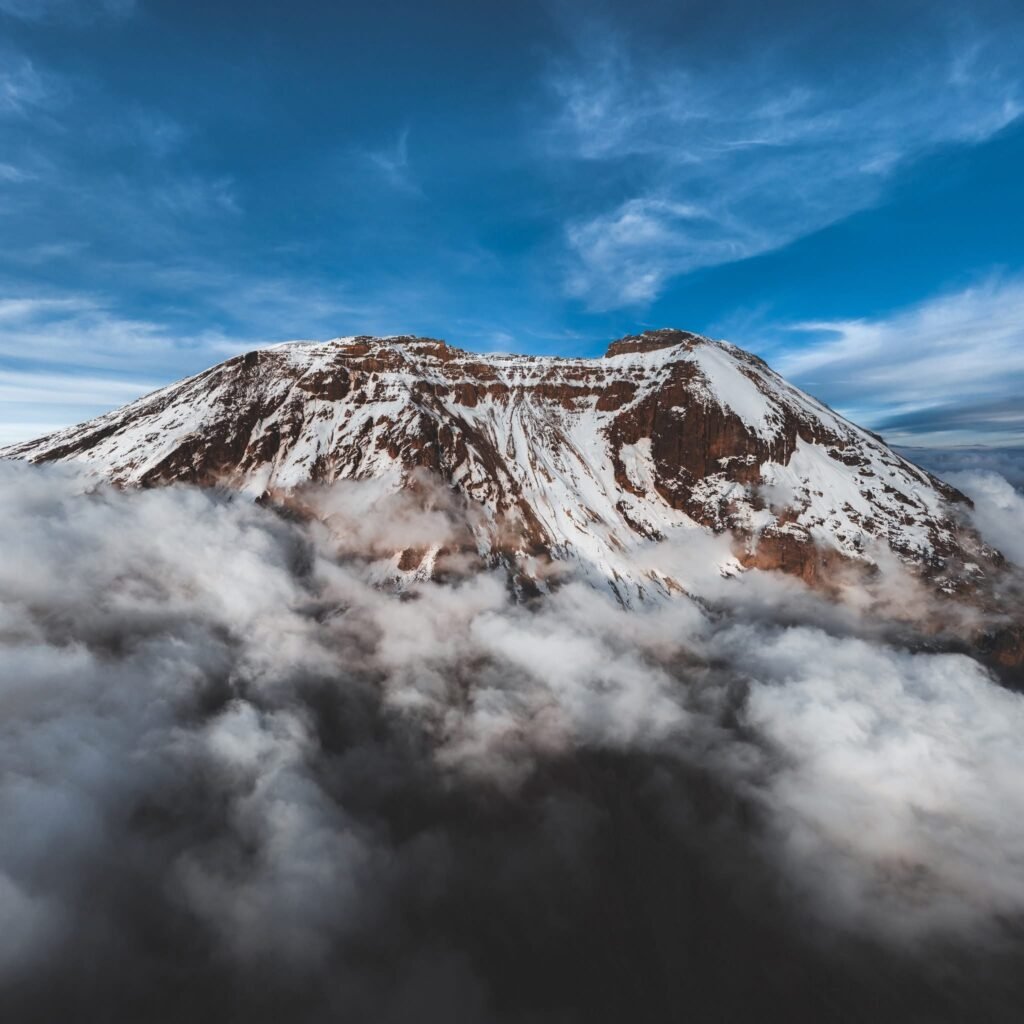
Mountain Kilimanjaro, Africa’s highest peak and one of the world’s most iconic natural landmarks, holds a rich history shaped by geology, culture, exploration, and global admiration. Understanding the History of Mountain Kilimanjaro offers deeper appreciation for this extraordinary mountain—its origins, its people, and its significance through time.
Human History and Cultural Significance
Early Indigenous Communities
For centuries, Mountain Kilimanjaro has been home to the Chagga people, who settled on the fertile lower slopes. They developed advanced irrigation systems, coffee farming traditions, and unique cultural practices tied to the mountain’s ecosystem.
To the Chagga, Kilimanjaro is more than a mountain—it is a source of life, spiritual meaning, and cultural identity.
European Discovery and Exploration
Although local communities knew the mountain for generations, Mountain Kilimanjaro was first reported to the Western world in the early 19th century. Early explorers and missionaries struggled to believe that snow could exist so close to the equator.
Key historical events include:
- 1848: German missionary Johannes Rebmann becomes the first European to document the mountain’s snow-capped peak.
- 1889: Hans Meyer and Ludwig Purtscheller reach the summit of Kibo—becoming the first recorded individuals to stand on the Roof of Africa.
Their success marked a turning point in global interest and inspired the modern era of mountaineering on Mountain Kilimanjaro.
Kilimanjaro in the Modern World
Tourism and Global Recognition
Today, Mountain Kilimanjaro is a world-class trekking destination, attracting thousands of climbers each year. Its rich history, distinctive routes, and biodiversity have earned it fame as one of the “Seven Summits.”
In 1973, Kilimanjaro National Park was established to protect its ecosystems. Later, in 1987, it was named a UNESCO World Heritage Site, confirming its global importance.
Environmental Changes
The mountain’s famous glaciers have been retreating for decades due to global climate change. Many scientific studies consider Kilimanjaro a vital climate indicator for East Africa and the world.
Conservation efforts now focus on protecting the forests, wildlife, and cultural heritage that make Mountain Kilimanjaro so extraordinary.
Why the History of Mountain Kilimanjaro Matters
Learning the history of Mountain Kilimanjaro helps climbers and travelers appreciate the mountain beyond its physical challenge. Its geological power, cultural depth, and exploration legacy make it a symbol of natural beauty and human perseverance.
Whether you are planning a trek or simply learning about Tanzania’s remarkable heritage, Kilimanjaro’s story continues to inspire.
Conclusion
Mountain Kilimanjaro is not only the highest peak in Africa—it is a mountain filled with history, stories, and significance. From its volcanic origins to its cultural roots and global recognition, Kilimanjaro stands as a timeless testament to nature’s majesty.